Ari writes the obituary for Our Time, emphasizing the pitfalls of substituting mass member organizing for donor-driven mobilization.
Ari S
[caption id="" align="alignnone" width="1000"]

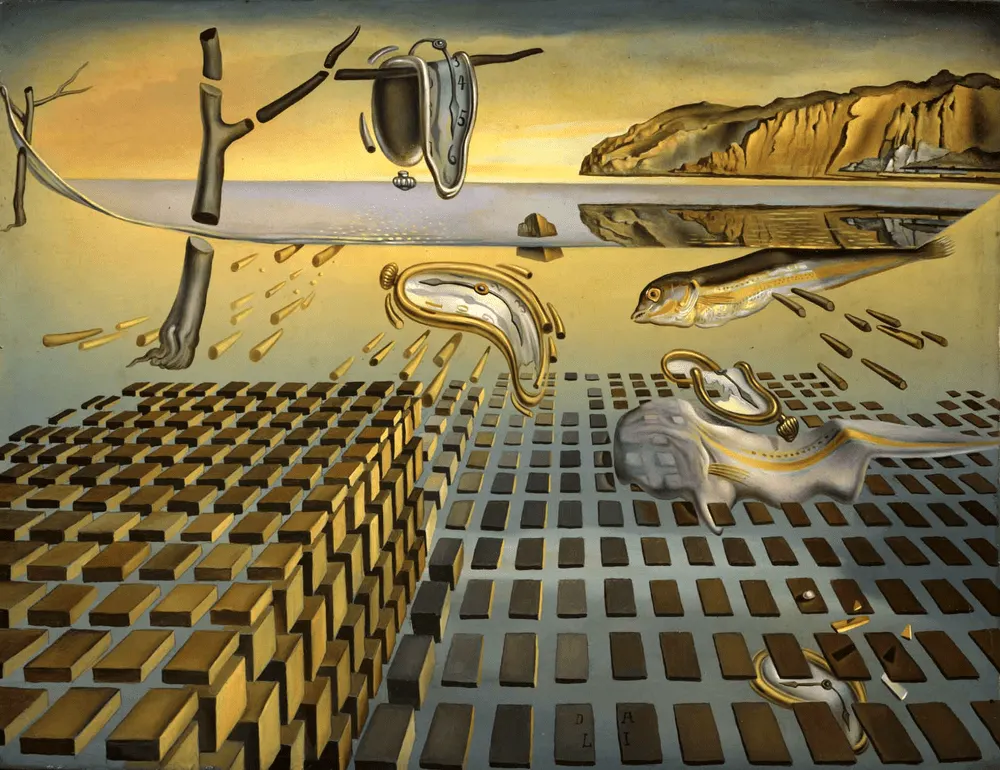
Disintegration of the Persistence of Memory , Salvatore Dali [/caption]
On April 21st, we were greeted with news of the untimely passing of Our Time, a 501(c)(4) set up by leading NYC-DSA members last November. As is tradition in the chapter, especially for less than triumphant messages, the news was relayed to us via Peter Sterne rather than through internal channels.
The organization was announced to us just as unexpectedly. Founded to “win the affordability agenda,” Our Time set out to organize Zohran Mamdani supporters and keep them engaged without the baggage of dues or formal membership. After it was announced, the liberal press was quick to make use of comparisons to the Obama campaign. They claimed that Mamdani, by creating new avenues to mobilize volunteers in support of the administration’s goals, was doing what Obama should have done, citing his team’s decision to shutter their volunteer mobilizing networks immediately after winning the election.The comparison would be fitting if Zohran were a rogue insurgent Democrat channeling populist anger through his individual personality, and lacking an organized movement behind him. That is, if he were Obama in 2008 or if he were Sanders in 2016. If Zohran were a progressive Democrat and not a democratic socialist. We now live in very different times.
Zohran’s campaign was the product of a DSA chapter with thousands of members, and a slate of election wins under its belt. He was described by the leading tendencies of NYC-DSA as a “cadre candidate,” and the chapter itself voted to put all its energy towards winning Zohran’s affordability agenda. Chapter leadership had pitched the Zohran campaign early on as a way to build the chapter. A political home for Zohran’s supporters already existed; it launched his campaign and won. Why did we need another?
Liberal outlets can be excused for not knowing the difference between a socialist and a progressive, and missing the role of DSA. However, we find the same logic in an August 2025 article in The Nation by DSA members Eric Blanc, Emily Lemmerman and Wen Zhuang, which outlined the theoretical blueprint for an organization like Our Time. They made the same comparison to the Obama campaign, starting from the premise that no organized movement existed to back up Mamdani’s agenda. The article proposed a new broad campaign around the affordability agenda, recruiting and training up new organizers and leaders from the community. Why could these tactics not instead be used to directly grow DSA as a political party for the working class?
Jeremy Gong and Oren Schweitzer addressed the same question in their article in Jacobin. They correctly pointed out that in order to carry out policy which is oppositional to capitalist interests, the working class needs to organize independently. Their solution entailed creating what they refer to as a “proto-party” which would bring together the Zohran campaign’s supporters and progressive organizations. They list DSA as just one coalition partner among many, forgetting which actually-existing proto-party is both Zohran’s own political home (alongside 100,000 other socialists), and the only one which took initiative to make the campaign happen.
In informal discussions following the launch of Our Time, there were whispers of a practical need to utilize campaign resources legally, but the actual political logic was left unstated. Peter Sterne’s obituary on Our Time clarified openly what was only implied in the preceding pieces. NYC-DSA leadership did not believe that Zohran’s volunteer base were ready to organize as socialists. They were mistaken. In the words of Emma Saltzberg, an Our Time board member, “It turns out that democratic socialism is more popular than we thought it was.” Far more volunteers went on to join DSA than supported Our Time, and the chapter grew from just under 6,000 members in late 2024 to over 14,000 members today.
One million New Yorkers voted to transform our city into a place they can live and work without the crushing burden of our existing social and political system. They want to make New York affordable, to use the wealth of society for society’s benefit. They want to have a system that reflects popular will and human needs over the interests of the wealthy and powerful. That is an impulse that can only be fully realized through socialism, and Zohran, running as an open socialist, is a confirmation of that fact.
Mamdani’s most active volunteers instinctively voted with their feet, to be part of an organization of members who think, deliberate and act together in the course of a movement for broad social change. They did not want to be merely an army of canvassers for policy goals already set by others, the model of the world of progressive non-profits and bureaucratic unions. That model stifles creativity and initiative of activists, and narrows the horizons of struggle through organizational and financial limitations. Instead of a mass membership, Our Time relied on donor funding and professional staff to get the goods. Once the funding dried up, there was nothing left to save.
Instead, these volunteers chose to be members of a self-funded and (imperfectly) democratic organization. It is exactly our success at talking to our communities, boldly and openly organizing around a powerful shared program and vision that we were able to cut through the most advanced propaganda in history, against the miseducation and bribery of a decisive section of the US working class. We didn’t just build a constituency of voters for socialist candidates, we recruited and developed fighters for the socialist future.
The misjudgement on the part of leaders in NYC-DSA to embark on the Our Time debacle would be a minor embarrassment if it did not mean a massive waste of funds, effort and volunteer lists which would have better served to build up DSA. More importantly, it illustrates a general poverty of political vision. Like Our Time, the leading tendencies of NYC-DSA prioritize mobilizing members, to make calls on politicians, to canvas, and to sign letter tools, instead of promoting a deeper and more enduring self-organization of the working class. Instead of solving the logistical problem of all-member spaces for members to make collective decisions in the chapter, we are turned out to “mass calls” and branch meetings consisting of power-point presentations. In the hostility of our leadership towards even the most measured criticism of our elected representatives lies a hostility towards deliberation and democracy itself.
This vision for the socialist project, like Our Time, is doomed to fail. If it is possible to win socialism it will be a conscious act of an organized working class that knows what it wants. We will not trick workers into overthrowing capitalism with clever branding and cookie-cutter policy campaigns. We must convince people of the need for socialism and teach them what that need really means. Insofar as they aren’t already there, it means taking risky and unpopular stances from time to time.
The kind of muscle required for the working class to rule is built in the process of struggle. There is no replacement for this process, which consists not just in campaigning, but in building lasting communities, and in discussing, analyzing and strategizing the path forward in every organizing arena. Along with expanding democratic participation at all levels of society, this requires a party. Only DSA has the ability to make that happen. It is indeed our time, should we choose to seize it.